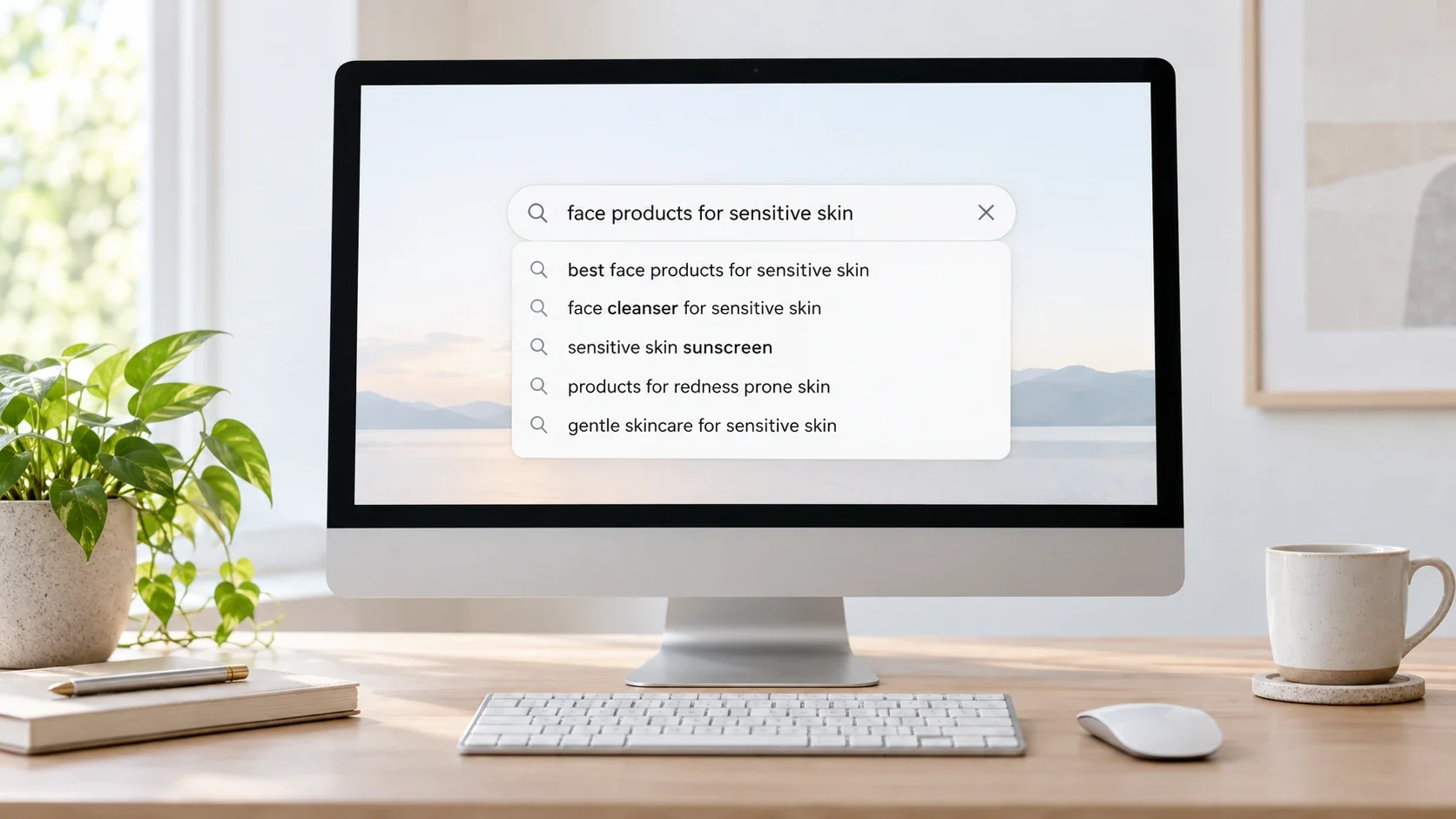
Desktop computer showing a Google search for sensitive skin products with related keyword suggestions.
You know what your business offers. But do you know what people are typing into Google when they're looking for it?
Those two things aren't always the same.
You might describe your services as "comprehensive financial solutions," while a potential customer is simply searching for "bookkeeping services for small businesses."
That difference matters.
Choosing the right keywords helps search engines understand your website and connects your business with people already looking for what you offer.
And the good news? You don't need to be an SEO expert to get started.
What Are SEO Keywords, and Why Do They Matter?
SEO keywords are the words and phrases people use when searching for products, services, or information online.
When your website uses relevant keywords naturally, it helps Google understand what your business offers and when your pages may be helpful to someone searching.
The goal isn't just to bring more people to your website. It's to attract the right people — those who are genuinely interested in your products or services.
So how do you find those keywords?
5 Simple Steps to Find the Best Keywords for Your Business
1. Start With What Your Customers Would Actually Search
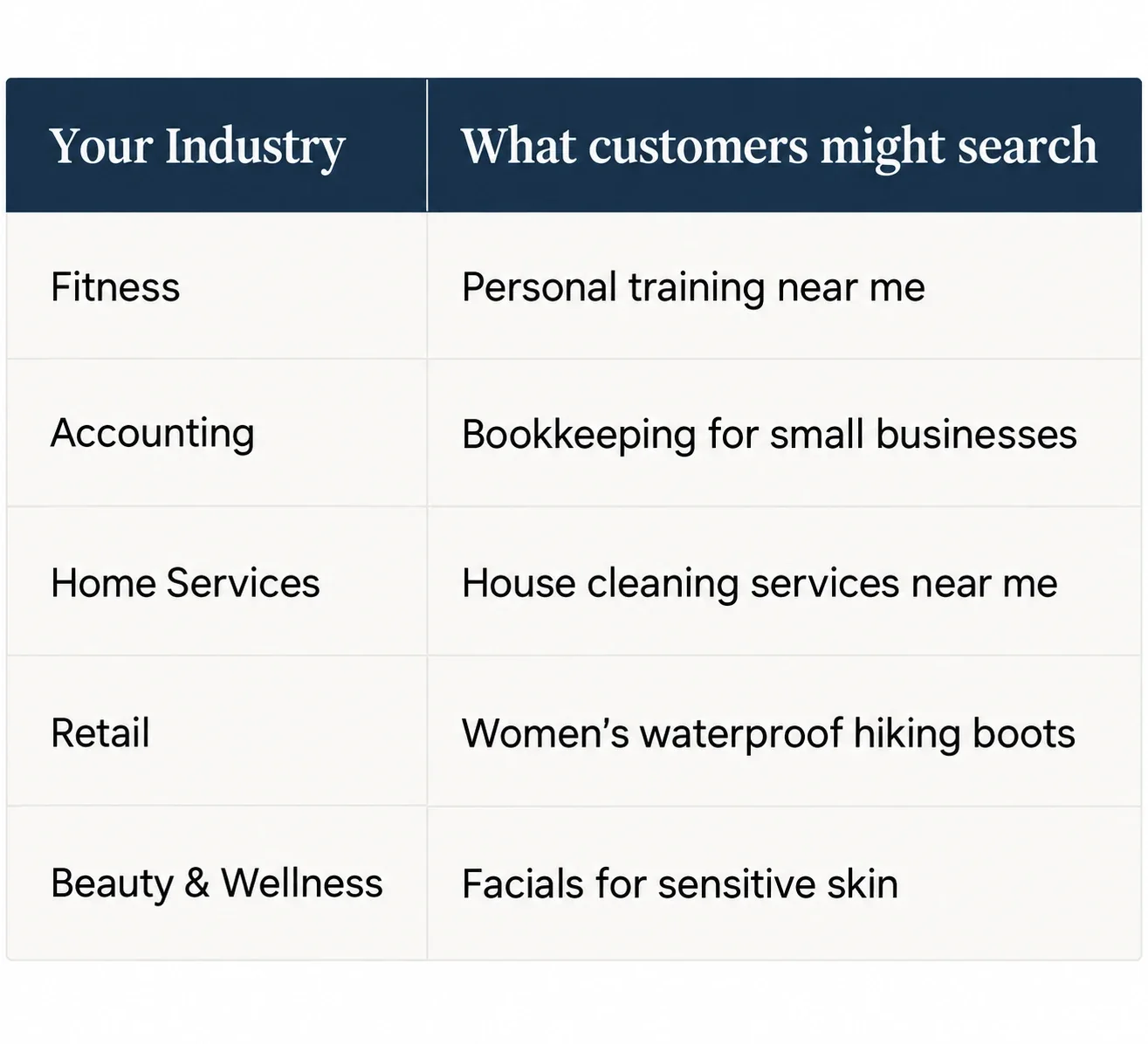
Table showing SEO keyword examples across five industries to help businesses target relevant customer searches.
Before opening an SEO tool, think about your business from your customer's perspective.
What would someone type into Google if they needed your services but didn't know your business existed?
We recommend skipping jargon and instead acting as if you were searching for the service with no background knowledge. The simpler the phrasing, the better.
Quick tip: Pay attention to the questions customers ask during consultations, phone calls, or emails. These are often great starting points for keywords and blog topics.
2. Let Google Give You Ideas
One of the easiest, completely free keyword research tools is Google itself.
Start typing a service or product into Google's search bar and look at the autocomplete suggestions.
For example, entering "personal trainer" may suggest more specific searches related to beginners, weight loss, or local training.
These suggestions can help you discover how people describe their needs.
Take a look at the People Also Ask and related search sections, too. They can reveal common questions your website could answer.
Quick tip: Don't assume every suggested keyword is worth targeting. Focus on the ones that genuinely relate to your services and ideal customers.
3. Use Free Tools to Explore Your Keywords
Once you have a starting list, do a little research.
A few tools worth exploring:
Google Trends: Compare search interest across phrases and see how it changes over time.
Google Keyword Planner: Explore keyword ideas and estimated search demand.
Google Search Console: See which searches are already helping people discover your website.
You don't need to become an expert in any of these tools overnight.
Start by looking for patterns. Are certain topics appearing repeatedly? Are people searching for specific services, locations, or questions?
These insights can help you focus.
4. Choose Keywords That Match What Your Customers Need
Not all keywords are created equal.
A broad keyword like "fitness" might attract lots of searches, but it doesn't tell you much about what someone wants.
A more specific phrase like "personal training for beginners in Greenwich CT" gives you a clearer picture of what that person is looking for.
These more specific searches are often called long-tail keywords.
When deciding which keywords to prioritize, consider three questions:
Relevance: Does this keyword accurately describe something my business offers?
Intent: Is the person looking for information, comparing options, or ready to purchase?
Competition: How hard will it be for my website to rank for this search?
Quick tip: Don't chase a keyword just because it has a high search volume. Fewer highly relevant visitors can be much more valuable than many people who aren't interested in your services.
5. Put Your Keywords to Work on Your Website
Once you've identified a handful of relevant keywords, the next step is using them thoughtfully throughout your website.
Good places to start include:
Page titles: Clearly communicate what each page is about.
Headings: Help visitors understand your products, services, and content.
Service descriptions: Explain what you offer using language your customers recognize.
FAQs and blog posts: Answer the questions people are searching for.
Meta descriptions: Give potential visitors a compelling reason to click on your website in search results.
For example, instead of a service page titled "Our Solutions," a bookkeeping business might use "Small Business Bookkeeping Services." The second title is clearer to both potential customers and search engines.
But remember, the goal isn't to repeat the same keyword as many times as possible.
Your website should always sound like it was written for people, not a search engine.
Choosing keywords is just one part of effective website SEO and performance optimizations. How your website is organized, how quickly it loads, and how clearly it answers customer questions all contribute to the experience.
A Quick Warning: Don't Overdo It With Keywords
One common SEO mistake is keyword stuffing which is repeating the same words or phrases excessively in an attempt to rank higher in search results.
This not only makes your content sound unnatural, but it can also hurt your search visibility.
For example, instead of writing:"Our bookkeeping services offer the best bookkeeping services for businesses looking for professional bookkeeping services."
Try: "We help small businesses stay organized and confident in their finances with reliable bookkeeping support."
The takeaway? Use keywords where they naturally fit, but always prioritize clear, helpful content that speaks to your customers. Google and AI-powered search tools increasingly focus on context, not just exact keyword matches.
What About AI Search?
Today, customers aren't just searching on Google. They're also asking questions through AI-powered tools like ChatGPT and Google's AI search experiences.
Instead of searching for "housekeeping," someone might ask: "What should I look for when hiring a housekeeper?" This makes clear, helpful content even more important.
Look beyond individual keywords and consider the questions your customers actually want answered.
Explain your services in everyday language, provide useful details, and share insights that reflect your experience.
Traditional SEO fundamentals still matter for AI-powered search. While no keyword can guarantee your business will appear in AI-generated answers, creating genuinely helpful, well-organized content provides a stronger foundation for discoverability.
Frequently Asked Questions About SEO Keywords
How many SEO keywords should my website target?
There's no magic number. Start by identifying one primary topic or keyword for each important page, along with a few closely related phrases. Focus on making each page useful and relevant rather than trying to fit dozens of unrelated keywords into your content.
Can I do keyword research for free?
Yes! Google Trends, Google Keyword Planner, and Google Search Console are great places to start. Google Search itself can also help you uncover customer questions and related search phrases.
Some tools require an account, and access to certain data may be limited.
How do I know if my website is using the right keywords?
Start with Google Search Console. Review the searches that bring visitors to your website and whether they align with what your business offers.
You should also look beyond website traffic. Are visitors contacting you, booking services, or making purchases? Ultimately, the right keywords should help attract visitors who are more likely to become customers.
How long does it take for SEO keywords to work?
SEO is a long-term investment.
Some improvements may show relatively quickly, while others can take several months or longer to affect search visibility. Results depend on factors such as competition, website quality, existing search performance, and how consistently you make improvements.
Finding Keywords Is the First Step. Building a strategy comes next.
Starting with a few relevant keywords is a great place to begin. But knowing which ones to prioritize, how to use them across your website, and whether they're actually helping your business grow requires a bigger-picture approach.
That's where an SEO strategy becomes valuable.
At LD Strategy, we help small and growing businesses make sense of SEO, AI search, and website performance without the unnecessary complexity.
Whether you've done some keyword research yourself and need an expert perspective, or you're looking for a comprehensive SEO strategy, we can help you identify opportunities and build a clear, actionable roadmap.
From keyword research and content recommendations to technical SEO and AI discoverability, we focus on practical improvements that support your business goals.
Ready to make your website easier to find?
Let’s discuss where your website stands and how we can help you move forward!