
If you're planning a new website or considering a redesign, one of your first questions is probably: How much should I budget for website design?
The answer depends on more than the number of pages you need.
A business starting from scratch with no branding, website content, or search engine optimization (SEO) strategy will have very different needs than a business looking to refresh an existing website.
Website design costs can range from a few thousand dollars to $50,000 or more, depending on project complexity, the services included, and who you hire.
But there's another factor that business owners often overlook: What will your website cost to manage after it launches?
At LD Strategy, we encourage businesses to think beyond the initial design investment. A website should be easy to navigate, clearly communicate your value, support your business goals, and be manageable long after the project is complete.
Let's break down typical website design costs, what influences pricing, and how to make a smart investment for your business.
How Much Does Website Design Cost in 2026?
Website design pricing varies widely based on project scope, functionality, and the level of support required.
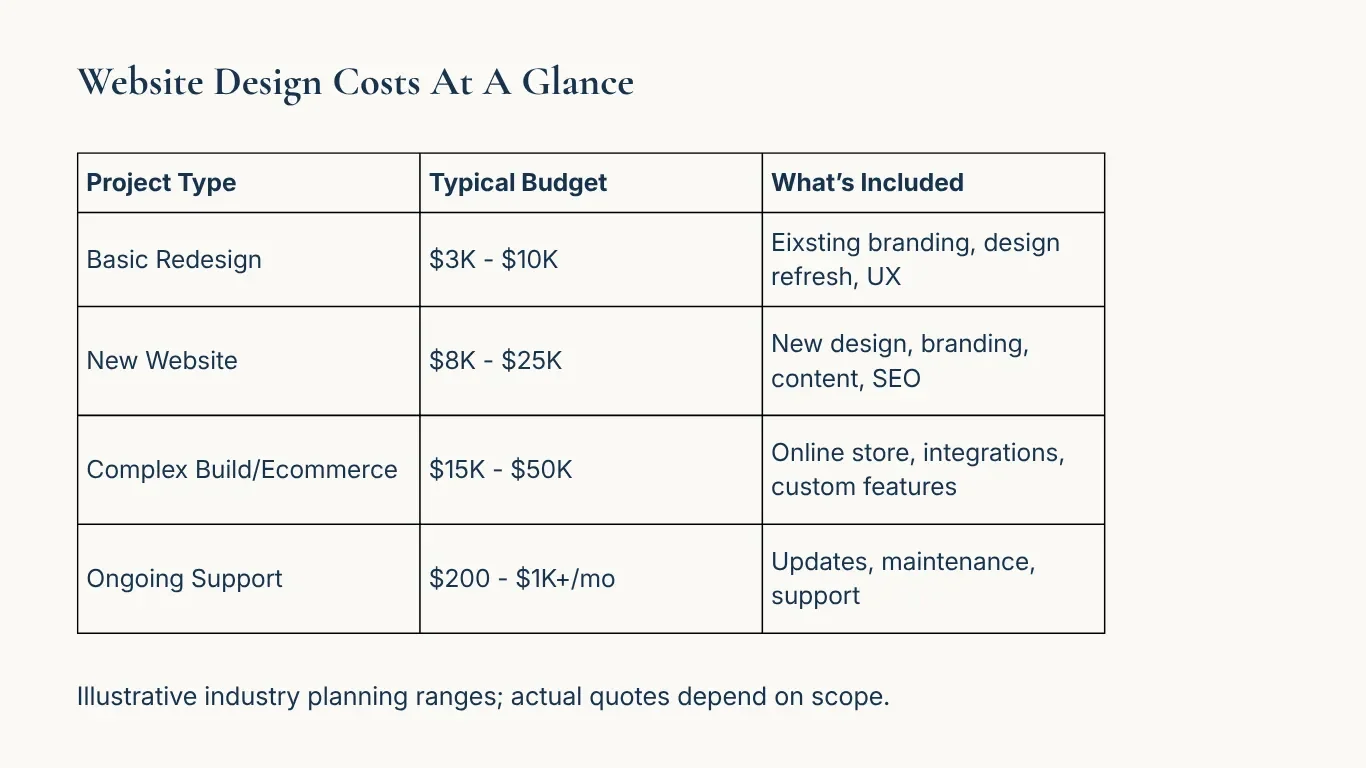
Here are four general pricing categories to help you establish a realistic budget.
1. Basic Website Redesign: $3,000–$10,000
A basic website redesign is often the most affordable option when your business already has established branding, usable content, and an existing website.
Rather than starting from scratch, a redesign focuses on improving what's already there.
A typical project might include:
Updating the website layout and visual design
Improving navigation and user experience
Refreshing existing pages using established branding
Optimizing the mobile experience
Making minor content and SEO improvements
Updating approximately 5–15 pages
Freelancers may offer services at the lower end of this range, while small agencies and more customized projects generally cost more.
However, a redesign isn't always as simple as changing how a website looks.
If your existing website has technical problems, outdated messaging, or poor search visibility, those issues should be addressed as part of the project scope.
Otherwise, you may end up with a more attractive website that still struggles to meet your business goals.
2. New Website Build: $8,000–$25,000
Building a new website generally requires a larger investment because you're creating the foundation of your business's online presence.
Unlike a redesign, there may be no existing content, structure, or brand guidelines to work from.
A new website project may include:
Initial discovery and website strategy
Brand guidelines and visual direction
Website structure and navigation
New page designs and layouts
Website copywriting and content development
Foundational on-site SEO
Mobile optimization
Contact forms and other standard functionality
Testing and launch support
The price will depend on how much of this work is included.
For example, a business that already has professional photography, approved copy, and a clear brand identity may require less work than a company that needs all three.
It's important to understand exactly what your website designer includes in the proposal.
Some providers focus exclusively on design and development, while others offer a more comprehensive service that includes strategy, content, SEO, and launch preparation.
3. Complex or Ecommerce Website: $15,000–$50,000+
More complex websites typically require additional planning, development, and testing.
Ecommerce websites are a common example because they involve more than simply displaying information.
Depending on the business, an ecommerce website may require:
Product catalogs and collection pages
Shopping cart and checkout functionality
Payment processing integrations
Inventory management
Shipping and tax configurations
Customer accounts
Email marketing or CRM integrations
Advanced product filtering and search
Custom functionality or third-party applications
These requirements increase the amount of work needed to launch a functioning website.
Highly customized websites, enterprise projects, and websites involving complex integrations may cost considerably more than $50,000.
With more than 11 years of experience in digital commerce, I've seen how important it is to consider the relationship between website functionality, user experience, and ongoing business operations.
A website should support how your business actually operates, not create unnecessary complexity.
This is why I recommend identifying essential functionality before requesting quotes.
4. Ongoing Website Support: $200–$1,000+ Per Month
One of the most frequently overlooked website expenses is what happens after launch.
Your website will need ongoing attention as your business evolves.
Depending on the platform and service provider, website support might include:
Content and image updates
Software updates and technical maintenance
Security monitoring and backups
Small design improvements
Performance monitoring
SEO improvements
Analytics and reporting
Basic maintenance-only services may cost approximately 100–500 per month, while ongoing support arrangements often fall around 200–1,000 or more.
More comprehensive SEO, content, and optimization retainers may cost 500–2,500+ per month.
Not every business needs a monthly retainer.
For some businesses, the most cost-effective approach is choosing a platform their internal team can comfortably maintain, with professional support available when needed.
These ranges are general industry planning estimates, not fixed prices or quotes from LD Strategy. Actual costs depend on the provider, platform, and scope of work.
What Factors Influence the Cost of Website Design?
Two websites with the same number of pages can have significantly different costs.
That's because website design pricing reflects the work required to build a website that meets your business needs.
Here are some of the biggest factors affecting project pricing.
Branding and Visual Identity
Do you already have an established logo, color palette, typography, and visual guidelines?
If so, your designer has a foundation to work from.
If not, your project may require additional branding services before website design can begin.
Establishing brand guidelines early helps create a consistent experience across your website and other marketing channels.
Website Content and Copywriting
Content is another important consideration.
If your existing website copy accurately communicates your services and brand positioning, you may only need minor revisions.
However, if your messaging isn't resonating with visitors, a redesign is an opportunity to improve it.
Creating new content requires time for research, interviews, writing, editing, and approval.
It also requires a clear understanding of your target audience and what you want visitors to do on your website.
SEO Requirements
I consider foundational SEO a non-negotiable part of a successful website project.
At a minimum, your website should have:
Clear, descriptive page titles and meta descriptions
A logical heading structure
Search-friendly URLs
Relevant internal links
Optimized images
Mobile-friendly layouts
An organized website structure
Proper indexing and technical SEO foundations
These elements help search engines understand your content and make it easier for visitors to navigate your website.
However, there's an important distinction between implementing foundational SEO and developing a comprehensive SEO growth strategy.
A detailed SEO roadmap, ongoing keyword research, weekly content creation, and performance optimization can be part of a longer-term investment.
For businesses with limited budgets, I recommend building a strong foundation first rather than trying to implement every possible SEO initiative before launch.
You can learn more about this approach in our article on how to get your website in Google AI Overviews.
Website Platform and Functionality
The platform you choose can influence both your upfront investment and your ongoing operating costs.
For example, Squarespace, WordPress, and Shopify offer different capabilities, customization options, and maintenance requirements.
A business that needs a straightforward service-based website may benefit from a platform that allows employees to make routine updates without technical support.
An ecommerce business with complex product requirements may need a more specialized solution.
The goal isn't to choose the platform with the most features.
It's to choose the platform that supports your business requirements without creating unnecessary operational costs.
Why the Cheapest Website Isn't Always the Most Affordable
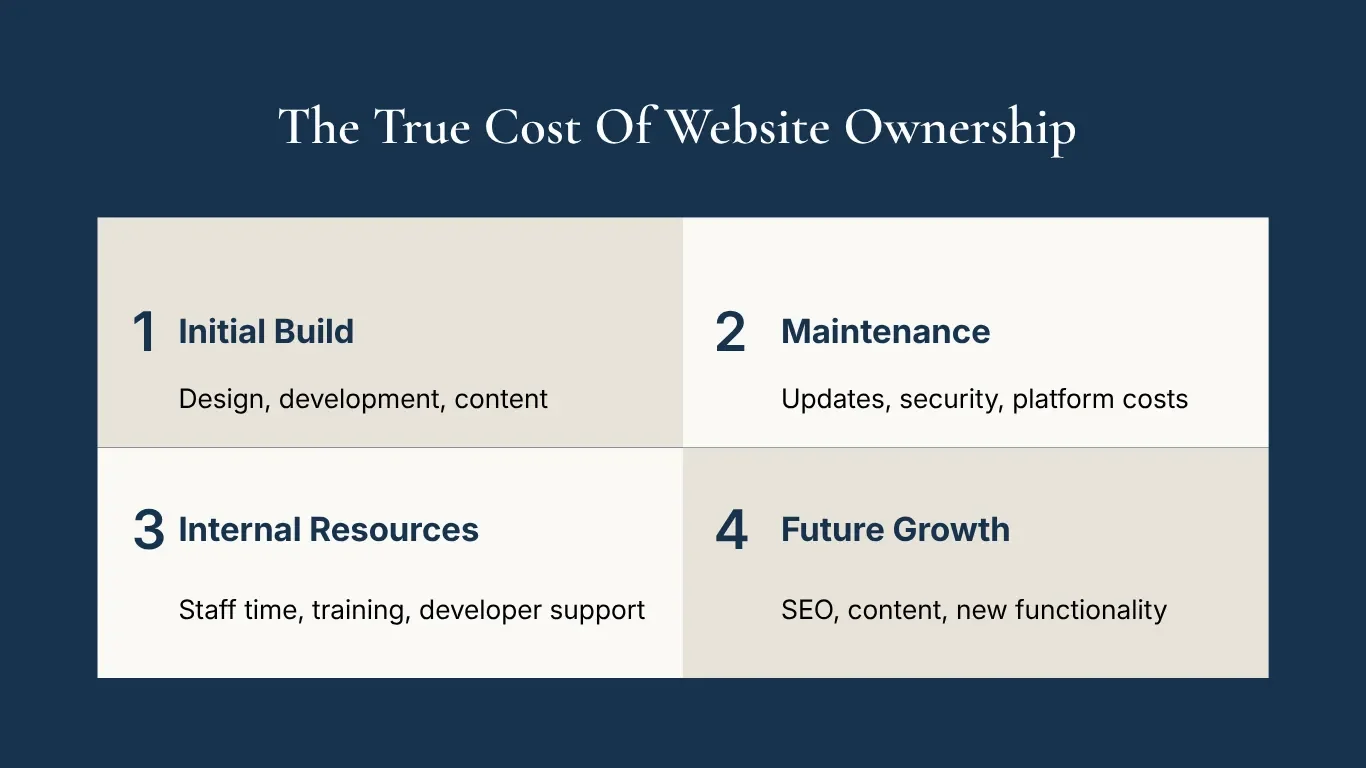
One mistake I frequently see business owners make is focusing on the lowest upfront price without considering the long-term implications.
A cheaper website might look appealing initially.
But what happens when you need to update your services, publish a new blog post, change an image, or add a new page?
If every small update requires a developer, those ongoing expenses can add up.
This is why I believe website affordability should be evaluated over time.
Consider the following questions:
Can I update website content myself?
Will my staff be able to learn the platform?
What maintenance will be required?
Are there additional hosting, licensing, or software costs?
Will I need to pay someone every time I make a change?
Can the website grow as my business evolves?
The answers can significantly influence the true cost of your website.
Can AI Website Builders Actually Save You Money?
AI tools like Claude and ChatGPT have made it easier than ever to create website designs, generate code, and develop content without hiring a traditional web developer.
For business owners working with limited budgets, that can be appealing.
However, there's a difference between creating a website that looks professional and building one that supports your business over time.
AI-generated websites may use familiar design patterns that don't fully reflect your brand identity or set you apart from competitors. More importantly, business owners should consider what happens after the website launches.
Can you easily update your content? Add new pages? Change your navigation? Optimize your site for search engines? Will you need technical expertise to troubleshoot problems or make routine improvements?
These questions matter because the initial savings may disappear if every update requires additional technical assistance.
AI can be an excellent resource for brainstorming, creating initial mockups, and accelerating parts of the design process. But it doesn't eliminate the need for thoughtful website strategy, SEO, accessibility, testing, and ongoing maintenance.
Before choosing an AI-generated website, consider whether you're investing in a manageable, long-term business tool or simply an inexpensive way to get online.
My advice: Don't evaluate a website solely on how quickly or cheaply it can be created. Consider how easily your business can manage and grow it after launch.
A Real Client Example: Reducing Long-Term Website Costs
We worked with a business that was struggling with its existing website.
The business wasn't seeing the website traffic it wanted, and its messaging wasn't connecting with visitors the way it needed to.
There was also an operational challenge.
The website was built on WordPress, and the team relied heavily on technical developers to make routine changes.
Even relatively minor edits required outside help, creating ongoing costs and slowing the team's ability to manage the website.
Rather than simply recommending a visual redesign, we looked at the broader business needs.
We recommended migrating the website from WordPress to Squarespace to create a more manageable experience for the internal team.
The project also included:
Migrating the existing website to Squarespace
Establishing foundational on-site SEO
Improving the website's underlying content structure
Providing education and training so employees could manage the platform
Giving the business a stronger foundation for future website improvements
The value of the project extended beyond the migration itself.
By giving employees the skills and knowledge to manage routine updates, the business reduced its reliance on outside technical support and streamlined ongoing website costs.
The initial investment helped create a more sustainable approach to website management.
The takeaway? A well-planned website investment can help reduce future expenses, not just create a better-looking website.
How to Budget for Website Design Without Overspending
Before approaching a website designer, I recommend getting clear on your goals and requirements.
This doesn't mean you need to know every technical detail.
In fact, identifying those requirements should be part of the discovery process with your website partner.
At LD Strategy, we work one-on-one with business owners to understand what they need their website to accomplish.
Often, asking the right questions uncovers requirements or challenges the business owner hadn't initially considered.
Those conversations help establish a realistic project scope and reduce the likelihood of unnecessary expenses or unexpected changes later.
Start With Your Business Goals
What do you actually want your website to accomplish?
Are you trying to:
Generate more qualified leads?
Increase online purchases?
Explain your services more clearly?
Improve visibility in search results?
Build trust with prospective customers?
Make the website easier for employees to manage?
Your goals should influence how you allocate your budget.
For example, a service-based business focused on lead generation might benefit more from clear messaging, intuitive navigation, and effective contact forms than from expensive visual effects or custom animations.
Separate Must-Haves From Nice-to-Haves
Not every feature needs to be implemented during the initial website launch.
For businesses working within a limited budget, I recommend prioritizing the elements that create a strong, functional foundation.
Your initial investment should focus on:
A clean, professional design
Clear messaging and service descriptions
Intuitive website navigation
A responsive mobile experience
Foundational SEO
Easy-to-find calls to action
A manageable content platform
Additional functionality, advanced optimization, and a more aggressive content strategy can often be introduced later.
This approach allows businesses to launch a website that meets their immediate needs while leaving room for future improvements.
Plan for Growth After Launch
Your website shouldn't remain static after launch.
As your business grows, your website should evolve with it.
Over time, you may want to invest in:
A comprehensive SEO roadmap
New landing pages targeting specific services
A consistent blog publishing schedule
Conversion rate optimization
Additional website functionality
Analytics and performance reporting
Improvements based on customer behavior
These initiatives can support long-term growth without requiring every service to be included in your original website design budget.
For additional guidance on the elements that contribute to website performance, read our article, What Makes a Website Successful?.
Questions to Ask Before Hiring a Website Designer
The best way to avoid unexpected expenses is to understand exactly what you're paying for.
Before committing to a website project, I recommend asking prospective designers or agencies the following questions:
What's included in the project price? Clarify whether branding, copywriting, SEO, testing, and launch support are included.
How many pages and design revisions are included? Understand what happens if your requirements change.
Will I be able to update the website myself? Ask about the platform's learning curve and ongoing technical requirements.
Is foundational SEO included? Make sure SEO isn't treated as an afterthought.
Will you provide training after launch? Determine whether your team will receive instructions or hands-on education.
What happens after the website launches? Ask about ongoing support, maintenance, and additional costs.
Can the website support future business growth? Make sure the platform and structure can accommodate your anticipated needs.
I also recommend asking how the provider approaches the discovery and planning process.
An experienced website partner should take the time to understand your business before recommending a solution.
That collaboration can be just as valuable as the website design itself.
Should You Build Your Website All at Once or in Phases?
For many businesses, a phased approach is the most practical option.
You don't necessarily need a fully developed SEO strategy, dozens of landing pages, and every possible feature before launching your website.
Instead, consider dividing your investment into two stages.
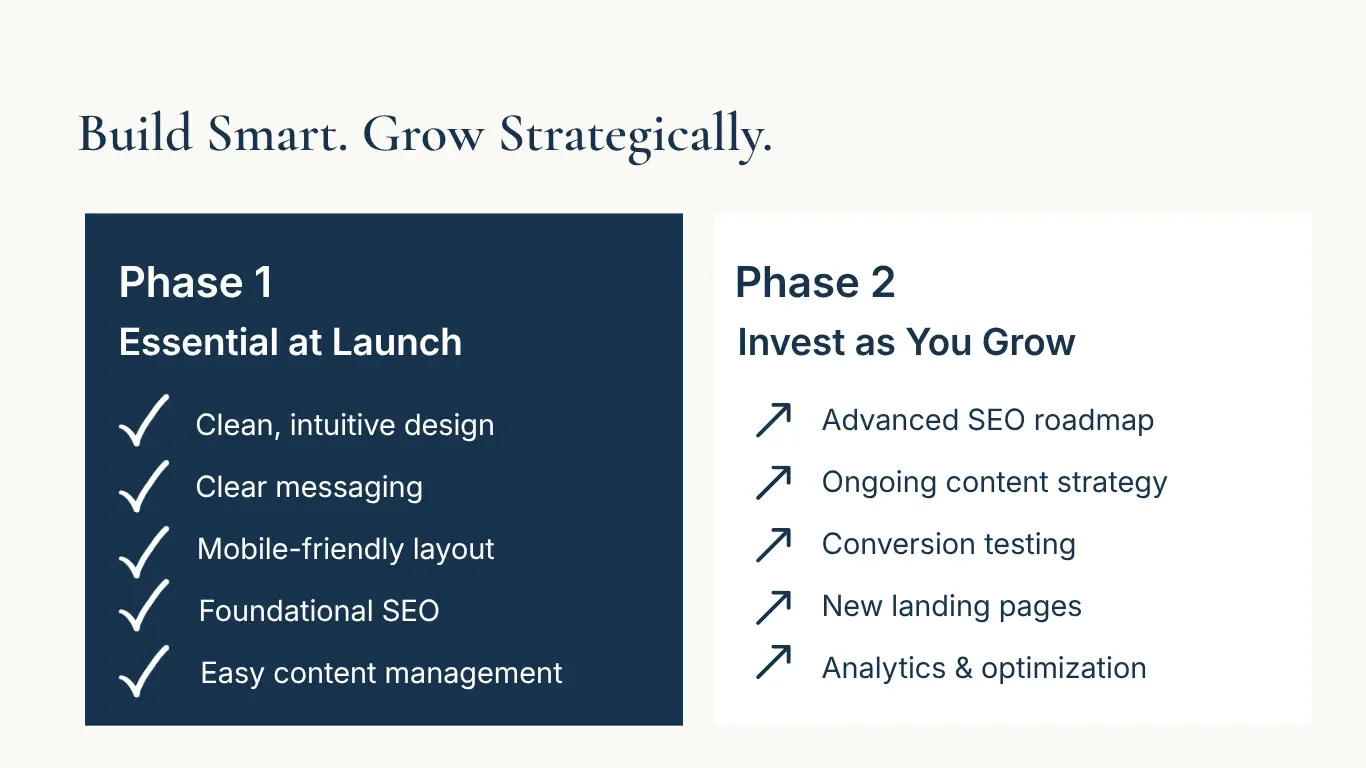
Phase 1: Build a Strong Foundation
Focus on creating a professional, functional website that supports your immediate business needs.
This includes clear messaging, thoughtful design, intuitive navigation, mobile responsiveness, and foundational SEO.
The objective is to give your business a reliable digital presence that visitors can easily understand and navigate.
Phase 2: Improve and Optimize
Once your website is live, you can use analytics, search performance data, and customer feedback to determine where additional investment will have the greatest impact.
This might include developing an SEO roadmap, publishing educational content, testing calls to action, or expanding into new service areas.
This phased approach gives your business flexibility.
Rather than spending heavily on features or strategies before understanding how visitors interact with your website, you can make informed improvements over time.
Is Professional Website Design Worth the Investment?
A professionally designed website can be a valuable business investment, but its value shouldn't be measured by appearance alone.
A successful website should support your business in practical ways.
It should help prospective customers understand what you offer, make it easy for them to take the next step, and let your team manage your online presence efficiently.
It's also important to recognize that a more expensive website doesn't automatically mean a better website.
The right investment aligns with your business goals, requirements, and long-term resources.
In my experience, the most effective website projects begin with thoughtful conversations about what a business actually needs.
They don't begin with a list of expensive features.
Final Thoughts: How Much Should You Budget for Website Design?
If you're planning a website project, start by identifying the type of website you need and the resources you already have.
A straightforward redesign might fall in the $3,000–$10,000 range, while a more comprehensive new website build could require $8,000–$25,000. Complex ecommerce or highly customized websites may cost considerably more.
But don't make your decision based on price alone.
Consider the total cost of ownership, including ongoing support, content management, technical requirements, and future growth.
My recommendation is to invest in a clean, intuitive, functional website with strong SEO foundations from the beginning.
Then build on that foundation as your business grows.
At LD Strategy, our approach to website design services starts with understanding your business goals and translating them into a practical website strategy.
Whether you're planning a new website or considering a website redesign, the goal is to create a solution that works for your business today and remains manageable tomorrow.
Ready to explore your website project?
Contact LD Strategy to discuss your goals, website requirements, and next steps.